
Nile Cruise vs Dahabiya 2026 — Which is Right for You?
This is the question Ahmed Emam is asked more than any other. After 15 years and over 50,000 travellers guided through Egypt, the answer is never “one is better than the other.” The answer is: they are different experiences designed for different travellers. This guide gives you every fact you need to make the right decision — honestly, without upselling either option.
Both a standard Nile cruise and a Dahabiya travel between Luxor and Aswan, stopping at the same headline temples: Karnak, Valley of the Kings, Edfu, Kom Ombo, and Philae Temple. Where they differ is in how you experience the river, who you share it with, and where the ship can stop.
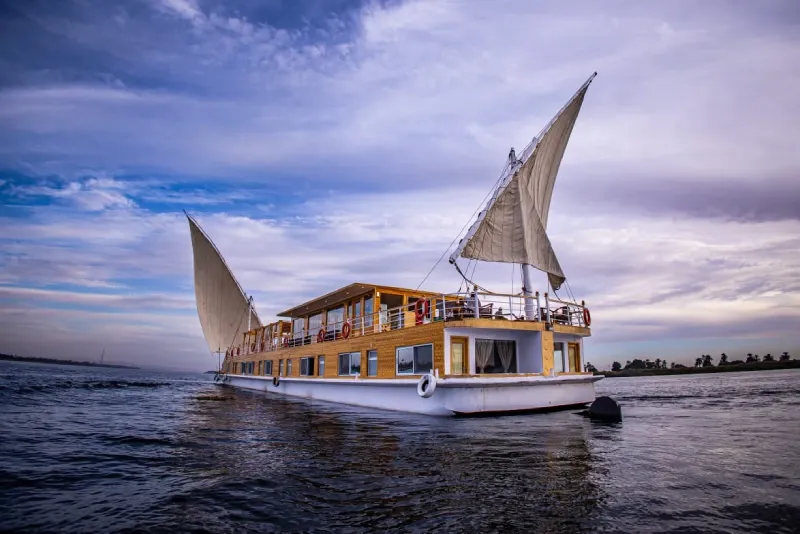
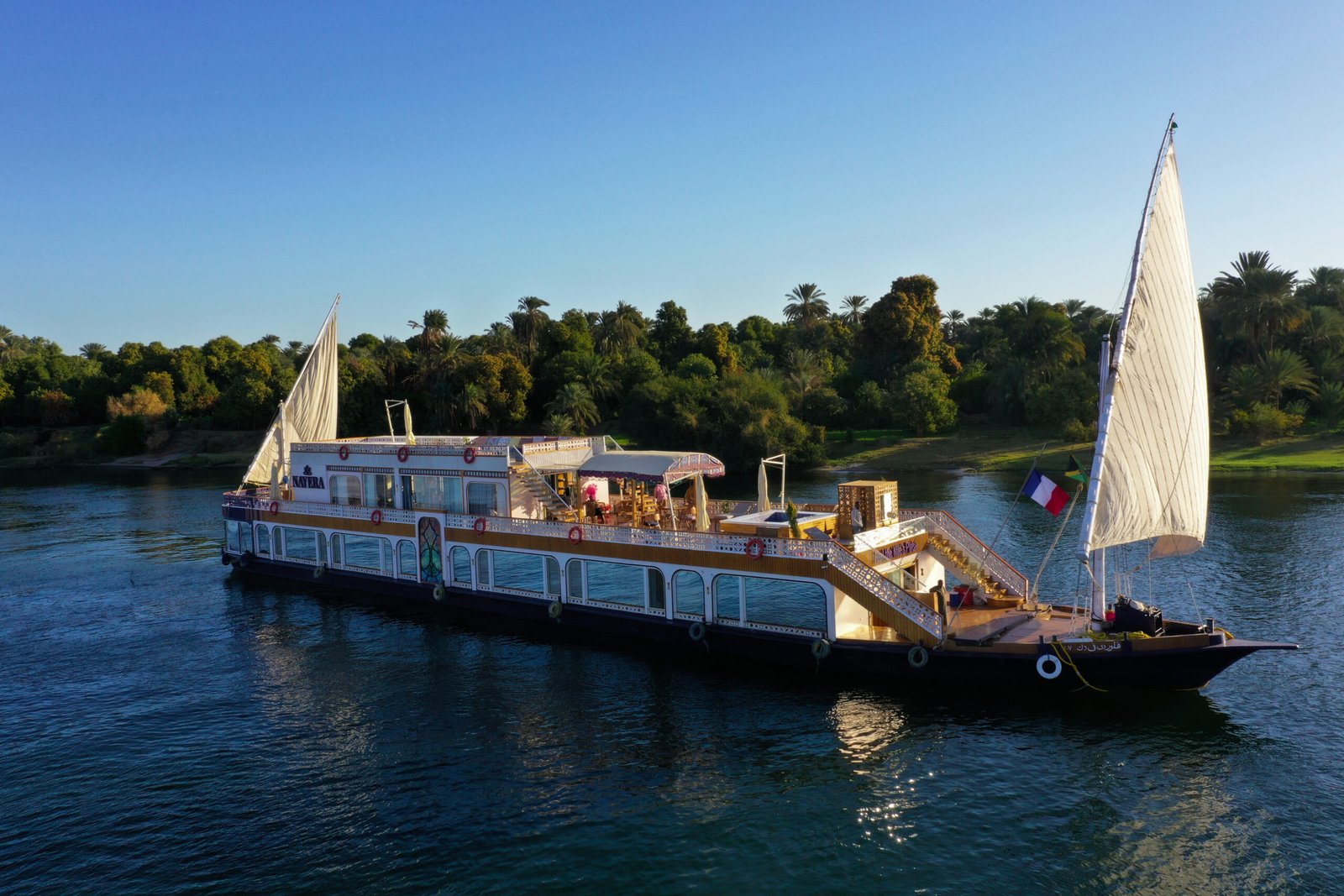
What Is a Dahabiya?
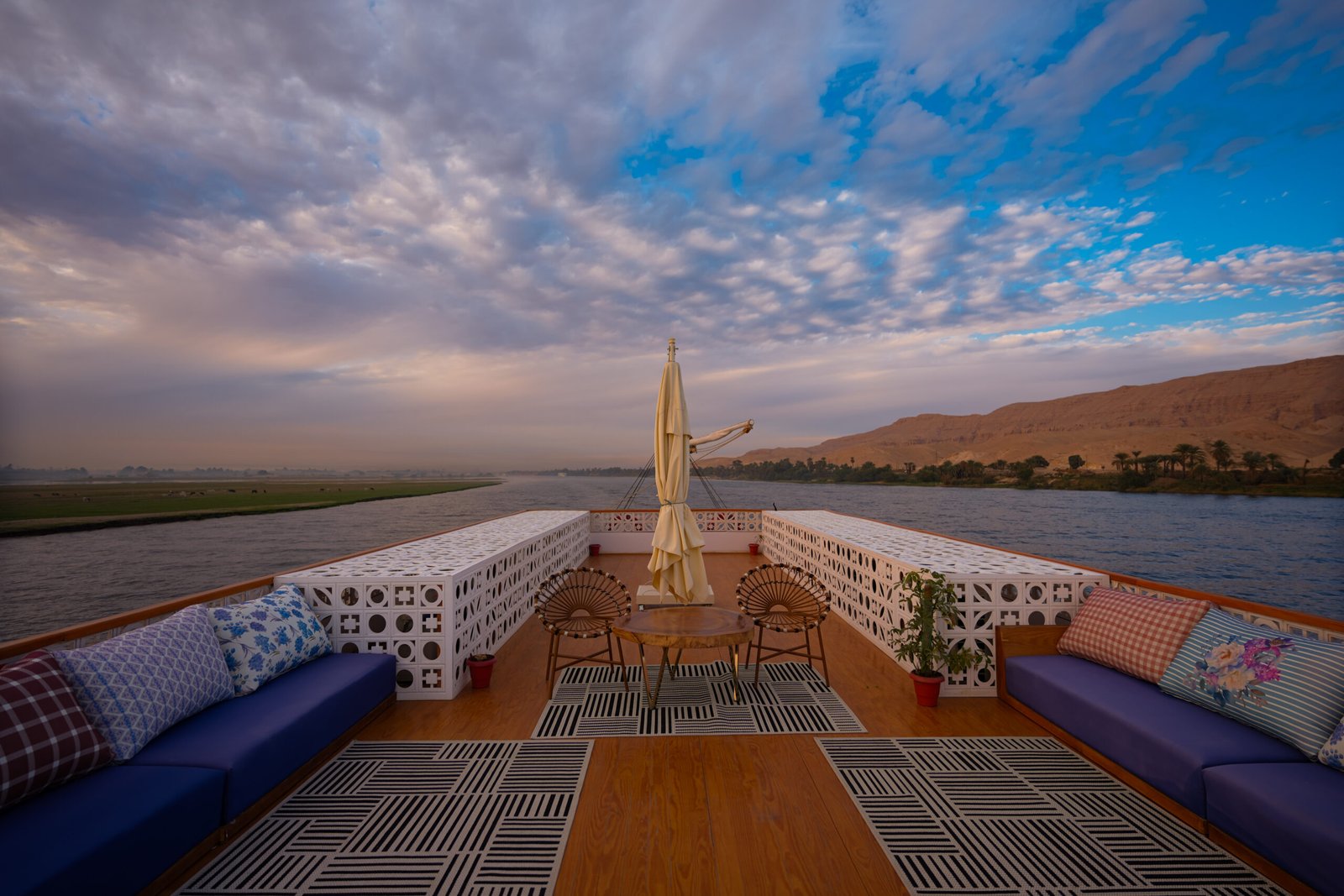
A Dahabiya (also spelled Dahabeeyah) is a traditional Egyptian sailing boat with a shallow wooden hull, wide sun deck, and large lateen sails. The word comes from the Arabic for “golden” — these boats were the preferred travel vessels of Egyptian royalty and Victorian explorers such as Amelia Edwards and Florence Nightingale in the 19th century. Today’s Dahabiyas have been fully modernised: en-suite air-conditioned cabins, gourmet kitchens, private sun decks, and Wi-Fi — but they retain the intimacy and silence of sail. Most carry between 8 and 20 passengers. Some are available for private charter for groups of 4 or 6.
What Is a Standard Nile Cruise?
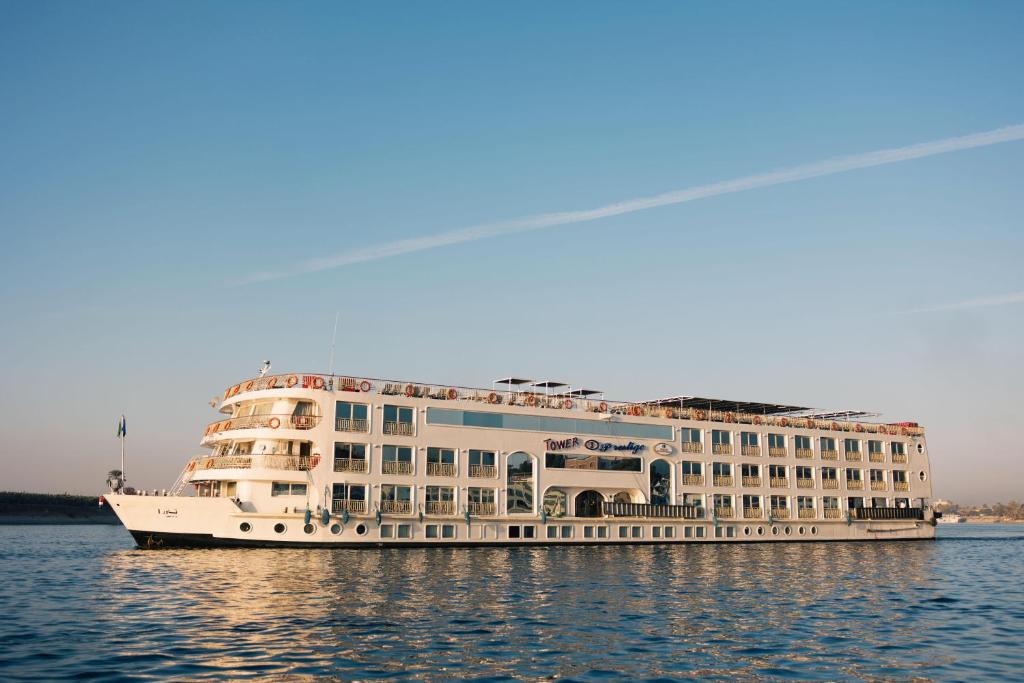
A standard Nile cruise is a motor vessel — typically carrying between 40 and 150 passengers — that travels between Luxor and Aswan on a fixed 3- or 4-night schedule. The ships range from budget 3-star to genuine 5-star luxury with balcony cabins, swimming pools, multiple restaurants, and nightly entertainment. The itinerary is set, the pace is efficient, and the price is considerably lower than a Dahabiya. For many travellers, a standard Nile cruise is the perfect choice.
The Honest Comparison — Every Factor That Matters
The Dahabiya Advantage — Sites No Standard Ship Can Reach
This is the most important practical difference and the one that tips the decision for serious Egypt travellers. A standard Nile cruise ship draws too much water and is too large to moor at smaller riverbank sites. A Dahabiya, with its shallow wooden hull, can anchor almost anywhere. This means Dahabiya passengers visit places that simply do not exist on any standard cruise itinerary:
- El Kab — an intact pre-dynastic walled city and the tomb of Ahmose, son of Ibana, who recorded the expulsion of the Hyksos. Almost no tourists. Extraordinary.
- Gebel el Silsila — the great sandstone gorge where ancient Egyptians quarried the stone for every major temple on the Nile. Rock-cut shrines still cover the cliff face.
- Bissaw Nubian Village — a living Nubian community rarely visited by tourists; colourful painted houses, traditional welcome, genuine exchange.
- Daraw Camel Market — one of Egypt’s most atmospheric markets, where Sudanese herders sell camels walked hundreds of kilometres along the ancient Forty Days Road. Only accessible on Tuesday mornings — the Dahabiya schedule can be aligned to this; a standard cruise cannot.
Who Should Choose a Standard Nile Cruise?
A standard Nile cruise is the right choice if any of the following apply to you:
- You have 3 or 4 nights available for the Nile portion of your Egypt trip
- You are travelling with children and want a swimming pool onboard
- You are on a first visit to Egypt and want to cover the headline sites efficiently
- You prefer a lower price point and are comfortable with a buffet-style onboard experience
- You enjoy meeting other travellers and the social atmosphere of a larger group
- You want the security of a fully structured programme with an included Egyptologist guide
At Best Nile Cruises, our standard cruise selection ranges from well-maintained 4-star ships to true 5-star vessels with balcony cabins, fine dining, and swimming pools. We do not list ships we would not put our own families on. See our full cruise selection here.
Who Should Choose a Dahabiya?
A Dahabiya is the right choice if any of the following apply to you:
- You are a couple or honeymooner and privacy is important to you
- You have 5 to 8 nights available and want to experience the Nile slowly
- You are a repeat visitor who has already done a standard cruise and wants a deeper experience
- You want to visit sites that do not appear on any standard cruise itinerary
- You are a photographer or artist and want control over dawn and dusk positioning
- You want silence on the river — no engine vibration, no deck music, no tannoy announcements
- You want dining on deck under the stars, with a small group or as a private charter
Ahmed Emam’s honest observation after 15 years: travellers who choose a Dahabiya almost never say “it was nice.” They say it was the best week of their lives. The silence of the Nile under sail, anchored alone at dusk opposite a temple with nobody else in sight, is something that a standard cruise simply cannot offer. See our Dahabiya fleet and departures.
Can I Do Both? Cairo + Standard Cruise + Dahabiya?
Yes — and this is actually our most popular itinerary for travellers with 10 to 14 days. The combination runs like this: 3 nights Cairo (Pyramids, Egyptian Museum, Grand Egyptian Museum) → fly to Luxor → 4 nights standard Nile cruise Luxor to Aswan → Abu Simbel day trip → fly home. Or replace the standard cruise with a 7-night Dahabiya for a longer, slower, more exclusive experience. See our Cairo and Nile Cruise packages here.
Practical Information
Ahmed’s Insider Tips — Before You Decide
- Book the Dahabiya early. The best Dahabiya sailings sell out 4–6 months in advance, especially peak season (November to February). If your dates are fixed, do not wait.
- Don’t choose a Dahabiya on price alone. If the price seems too low for a “luxury” Dahabiya, check the cabin size, the crew-to-guest ratio, and the condition of the vessel. Ahmed inspects every boat before recommending it.
- Standard cruise: ask about the ship’s age and last refit. Some 5-star-rated ships on booking sites are 25+ years old. We only list ships that meet our personal standards.
- Both options can include Abu Simbel. The temples of Abu Simbel are 280km from Aswan and require a separate early-morning flight or road transfer from Aswan regardless of which cruise you take — this is not included in the cruise itself.
- Repeat visitor? Always Dahabiya. If you have already done a standard Nile cruise and are planning a return trip, the Dahabiya will show you a completely different Egypt — guaranteed.
Frequently Asked Questions — Nile Cruise vs Dahabiya
Is a Dahabiya more comfortable than a standard Nile cruise?
It depends what you mean by comfort. A 5-star Nile cruise ship has larger cabins, a swimming pool, and a full-service restaurant — things a Dahabiya does not have. But a Dahabiya offers a different kind of comfort: silence, privacy, intimate dining on deck, and the sensation of the river moving beneath you under sail. Most Dahabiya passengers find it more comfortable emotionally even if the physical facilities are slightly more modest.
Can a family with young children take a Dahabiya?
Yes, especially on a private charter. Families who charter a full Dahabiya have the entire boat to themselves, the crew adjusts the pace to suit the children, and the deck is a safe and exciting play space. However, for young children who need a swimming pool and greater space, a 5-star standard cruise is often more practical. We recommend discussing your specific family with Ahmed before booking.
What is the difference between a Dahabiya and a felucca?
A felucca is a small, open wooden sailboat with no cabins, no facilities, and no kitchen. Felucca trips last a few hours and are common around Aswan as a scenic experience. A Dahabiya is a full accommodation vessel with private en-suite cabins, a kitchen, dining area, and crew — comparable to a small boutique cruise ship that happens to use sails. They are entirely different products.
How far in advance should I book a Dahabiya Nile cruise?
For peak season sailings (October to February), we recommend booking at least 3 to 6 months in advance. The best Dahabiyas carry only 8 to 16 passengers and sell out quickly — particularly for Christmas, New Year, and February departures. Shoulder season sailings (March–April and September–October) have more availability but still benefit from 6–8 weeks lead time.
Do both a standard cruise and a Dahabiya include an Egyptologist guide?
All Best Nile Cruises programs — standard and Dahabiya — include a licensed Egyptologist guide. On a standard cruise, the guide leads group excursions ashore. On a Dahabiya, the guide is private to your group throughout the entire sailing, available for questions at meals, on deck, and at every temple visit. This private guide experience is one of the most significant practical advantages of the Dahabiya.
After 15 years and over 50,000 travellers, Ahmed Emam can tell you within five minutes which option is right for your trip — honestly, with no pressure. Browse our full Nile cruise selection or our Dahabiya fleet, or contact us directly to ask any question before you commit to anything.
Written by Ahmed Emam — Egypt travel specialist since 2010, founder of Around Egypt Tours. Has personally sailed the Nile on over 120 Dahabiya sailings and 200+ standard cruise programmes with international clients.