
Abu Simbel Sun Festival 2027 — The Solar Alignment of Ramesses II
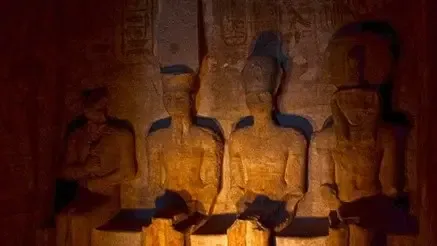
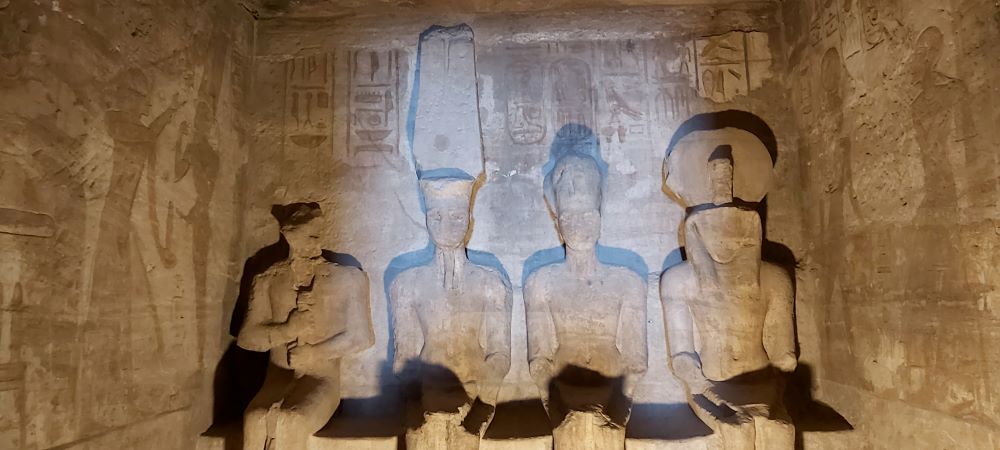
Twice a year, at the Great Temple of Abu Simbel, something happens that stops even the most well-travelled visitors in complete silence. At sunrise, a single shaft of light enters the temple entrance, travels 65 metres through the darkness of the hypostyle hall and the vestibule, and illuminates the faces of the gods seated in the inner sanctuary. For approximately 20 minutes, the stone faces of Ramesses II, Ra-Horakhty, and Amun glow in the early light while Ptah — the god of darkness and the underworld — remains in shadow beside them.
This alignment was not accidental. It was engineered by ancient Egyptian architects 3,300 years ago, specifically to mark two dates in the pharaonic calendar corresponding to Ramesses II's birthday (or coronation day) on February 22 and his victory at the Battle of Kadesh on October 22. The precision required to achieve this inside a rock-cut temple is a feat that modern engineers study with genuine admiration.
Abu Simbel Sun Festival 2027 — Exact Dates
Note on timing: The alignment begins at approximately 06:00–06:15 local time (Egypt time, UTC+2) and the illumination lasts approximately 20 minutes. The temple opens early on festival days specifically for the event. Visitors must be inside the sanctuary or as deep into the hypostyle hall as possible before sunrise to witness the full alignment. Arriving at 05:30 is strongly recommended.
Important note on the original vs current dates: When the temples of Abu Simbel were relocated 65 metres uphill in 1968 to save them from the rising waters of Lake Nasser, the alignment shifted by approximately one day. The original ancient dates were February 21 and October 21. The current observed festival dates are February 22 and October 22. The Egyptian Ministry of Antiquities recognises the 22nd as the official festival date for both months.
The Engineering Behind the Solar Alignment
The Great Temple of Abu Simbel was carved entirely from a sandstone cliff during the reign of Ramesses II (1279–1213 BCE). The temple is oriented precisely so that on two specific mornings, the axis of the temple aligns perfectly with the rising sun on the horizon. The entrance faces east-northeast at a precise angle that allows the sunrise beam to travel the full length of the temple — through the entrance, through the hypostyle hall with its eight Osiride pillars, through the vestibule, and into the innermost sanctuary 65 metres from the entrance.
In the sanctuary, four statues are carved from the living rock: Ptah (god of darkness, left), Ramesses II himself (as a deified pharaoh), Amun (king of the gods), and Ra-Horakhty (the sun god, right). The alignment was designed so the sun illuminates everything except Ptah — the god of darkness who, by sacred logic, must remain in shadow even as the sun illuminates his companions.
The precision of this engineering is made more remarkable by the fact that the ancient Egyptians achieved it without any of the astronomical instruments used today. The entire temple orientation was calculated from the movement of stars and sun positions alone, executed at the scale of a cliff face, and it has worked without interruption for over three millennia.
What to Expect on Festival Day
The Abu Simbel Sun Festival is Egypt's most atmospheric ancient event. Here is what actually happens:
- Crowds arrive before dawn. The February festival in particular draws thousands of visitors — Egyptians, Arab tourists, and international travellers. Many people camp overnight at Abu Simbel to secure a good position. If you are flying from Aswan, the early morning flight (approx. 06:00 departure) arrives as the event begins. For the full experience, staying in Abu Simbel the night before is strongly recommended.
- The atmosphere outside the temple before sunrise is extraordinary. Music, traditional Nubian performance, and a gathered crowd watching the desert horizon together creates an energy unlike any other Egypt site visit.
- The illumination lasts approximately 20 minutes. The light enters slowly, the faces brighten gradually, and then the sun rises above the alignment angle and the sanctuary returns to its normal indirect lighting. Those 20 minutes feel entirely different from ordinary time.
- Photography restrictions apply inside the sanctuary. Flash photography is prohibited. Long-exposure photography without flash is usually permitted but rules can change — confirm with your guide on the day.
- After the alignment, the temple is open for normal visiting. This is actually the best time to visit the rest of the temple — the crowd thins, the morning light is perfect, and the temple reliefs are extraordinary in the warm early sun.
How to Get to Abu Simbel for the Sun Festival 2027
Abu Simbel is 280km south of Aswan and 40km from the Sudan border. There are two ways to reach it:
Option 1: Stay in Abu Simbel the Night Before (Strongly Recommended for the Festival)
The best way to experience the Sun Festival is to arrive in Abu Simbel the afternoon before, check into a local guesthouse or the Seti Abu Simbel Lake Resort, visit the temples in the late afternoon when they are quieter, have dinner, and be at the temple entrance before 05:30 the following morning. This gives you the full experience — the pre-dawn atmosphere, the alignment itself, and the post-alignment temple visit — without the rush of an early morning flight.
Option 2: Early Morning Flight from Aswan
EgyptAir operates early morning flights from Aswan to Abu Simbel (approximately 45 minutes). On festival days, the earliest flight typically departs around 06:00, arriving as the alignment begins. You risk missing the opening minutes of the illumination but typically arrive in time for the peak illumination period. Return flights in late morning. This is the right choice for travellers whose Egypt itinerary does not allow an Abu Simbel overnight.
Option 3: Road Convoy from Aswan
The road convoy departs Aswan at approximately 03:00–04:00 (timing varies by festival and by year). The drive is 3.5 hours one-way on a good desert road. For festival day, Ahmed does not recommend the road convoy — the timing means arriving exhausted at the alignment and then facing another 3.5-hour drive back. The flight is significantly better.
Abu Simbel Sun Festival — What to Know Before You Book
- Book flights and accommodation 3–6 months in advance. The February festival in particular sells out accommodation in Abu Simbel many months ahead. Aswan flights on February 21–22 also fill quickly with festival visitors.
- The February festival is larger and more atmospheric than October. February draws significantly more visitors and has a stronger festival atmosphere with cultural performances. October is quieter and more intimate — better for photography, harder to get the full festival energy.
- Combine with a Nile cruise or Aswan extension. The Sun Festival works best as part of a wider Egypt itinerary. Most travellers combine it with a Nile cruise ending in Aswan plus an Abu Simbel overnight, or as a standalone 4–5 day Aswan extension including Philae Temple, the Unfinished Obelisk, and Lake Nasser.
- Dress in layers for the pre-dawn desert. The desert at 05:00 in February is cold — often 10–12°C at Abu Simbel even in winter. Bring a warm layer. By 08:00 it will be 25°C and the layer will come off.
- Bring a torch and good camera settings. The sanctuary is very dark during the alignment itself. A small torch and phone camera in night/low-light mode captures the atmosphere. Do not use flash.
The History of Abu Simbel — Why Ramesses II Built It Here
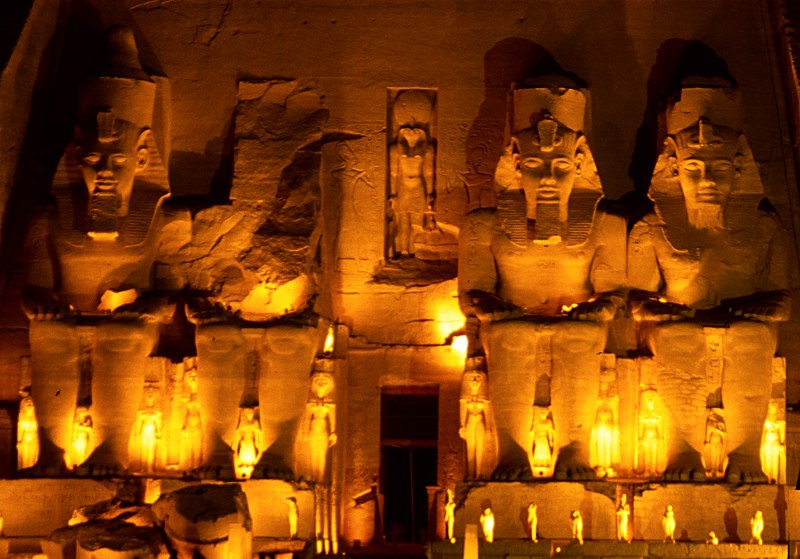
Abu Simbel was not built at this location by accident. Ramesses II chose this specific cliff face on the west bank of the Nile, deep in Nubia, for two reasons: political and religious. Politically, it was a statement of Egyptian power to the Nubian peoples to the south — two massive temples cut into the cliff with four 20-metre colossi of the pharaoh visible from the river, impossible to ignore. Religiously, it was a temple of self-deification — Ramesses II was worshipped as a living god at Abu Simbel during his own lifetime, alongside the major deities Amun, Ra-Horakhty, and Ptah.
The smaller temple beside the Great Temple was dedicated to Ramesses II's favourite wife, Queen Nefertari, and to the goddess Hathor. It is the only temple in ancient Egypt dedicated to a queen by a pharaoh during her own lifetime — a measure of how uniquely Nefertari was regarded. The facade features alternating colossi of Ramesses II and Nefertari at identical scale — also unique in ancient Egyptian art, where queens were always depicted smaller than pharaohs.
When the Aswan High Dam was completed in 1970, the rising waters of Lake Nasser threatened to submerge both temples entirely. In one of the most ambitious engineering projects of the 20th century, UNESCO coordinated the cutting of both temples into 1,036 blocks weighing up to 30 tonnes each, and their reassembly 65 metres higher and 200 metres back from the original position — preserving the solar alignment with only a one-day shift.
Frequently Asked Questions — Abu Simbel Sun Festival 2027
What are the exact Abu Simbel Sun Festival 2027 dates?
February 22, 2027 and October 22, 2027. The solar alignment occurs at sunrise on each date, beginning at approximately 06:00–06:15 Egypt local time (UTC+2) and lasting approximately 20 minutes. These dates are recognised by the Egyptian Ministry of Antiquities and Tourism as the official festival dates.
Why does the sun illuminate three statues and not all four?
The four sanctuary statues are Ptah (god of darkness and the underworld), Ramesses II, Amun (king of the gods), and Ra-Horakhty (the sun god). The ancient architects deliberately designed the alignment so that Ptah — the god associated with darkness — remains in shadow even when the sun illuminates his companions. This is intentional theology, not an engineering limitation. The fact that this deliberate exception still works after 3,300 years and a relocation is one of the most extraordinary aspects of the Abu Simbel phenomenon.
Is the February or October festival better to attend?
February is larger, more atmospheric, and draws greater crowds — there is genuine festival energy with cultural performances and a shared sense of occasion. October is quieter, cooler, and better for photography. For a first visit, February is the stronger experience. For photographers and those who prefer intimate experiences, October is excellent.
Can I see Abu Simbel without attending the Sun Festival?
Absolutely — and the vast majority of Abu Simbel visitors do exactly this. The temples are open year-round and are extraordinary at any time. A dawn visit (arriving at 07:00 by early morning flight from Aswan before the day-trip crowds arrive) delivers the temples almost to yourself. The solar alignment on festival days is a special addition to an already exceptional site. See our complete Abu Simbel guide here.
How far in advance should I book for the February 2027 Sun Festival?
By September 2026 at the very latest. Abu Simbel has very limited accommodation (fewer than 10 hotels and guesthouses in the village). Aswan flights on February 21–22 sell out months ahead. Ahmed recommends booking the complete programme — Abu Simbel overnight, flights, and Nile cruise or Aswan hotel — by July 2026 for guaranteed availability.
The February 22, 2027 festival will sell out accommodation many months ahead. Ahmed Emam can build a complete programme around the festival — Abu Simbel overnight, the alignment at dawn, and a full Egypt itinerary before or after. Contact us here to start planning, or browse our Nile cruise programmes and Egypt packages for the ideal combination.
Written by Ahmed Emam — Egypt travel specialist since 2010, founder of Around Egypt Tours and Egypt For Travel Has attended the Abu Simbel Sun Festival multiple times and accompanied international clients to both the February and October alignments. Last reviewed and updated: June 2026.