
Luxor in One Day — The Perfect Nile Cruise Itinerary
Luxor was the ancient city of Thebes — the capital of Egypt's New Kingdom and the religious heart of the ancient world for over a thousand years. On the East Bank, the living city of temples built for the gods. On the West Bank, the city of the dead — the royal tombs, funerary temples, and painted chapels of the pharaohs. Together, these two banks hold the greatest concentration of ancient monuments on earth. One day is not enough to see everything. But one perfectly planned day is enough to see everything that matters.
Understanding Luxor — East Bank vs West Bank
The Nile divides Luxor into two entirely different ancient worlds, and understanding which sites are where is the first planning step:
How Nile cruise passengers reach the West Bank: Your ship moors on the East Bank. Motorboats cross the Nile to the West Bank landing in approximately 10–15 minutes. Your Egyptologist guide arranges the crossing. Private vehicles wait on the West Bank for the temple visits.
The Perfect One-Day Luxor Itinerary from a Nile Cruise
This schedule is built for a standard 4-night Nile cruise that boards in Luxor and sails to Aswan. On most itineraries, the Luxor day looks like this: board the ship mid-afternoon, meaning you have the full morning and early afternoon free in Luxor. Here is exactly how to use those hours.
6:30am — Colossi of Memnon (15 minutes)
Start with the Colossi. These two 18-metre seated statues of Amenhotep III stand alone on the West Bank plain, and the early morning light on them is extraordinary. You stop here en route to the Valley of the Kings — it takes 15 minutes and is worth every second. At this hour there are almost no other visitors.
7:00am — Valley of the Kings (90 minutes)
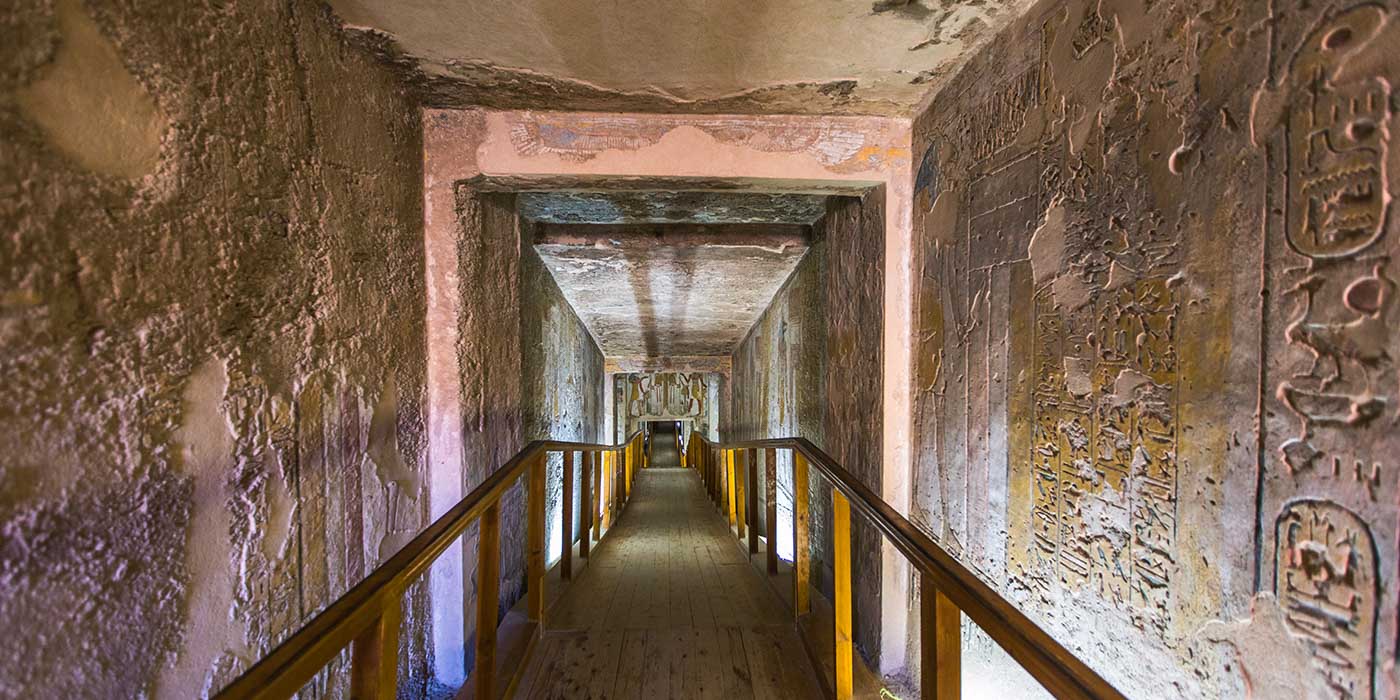
Arrive at the Valley of the Kings at opening (7am). This is the single most important timing decision of the day. By 9:30am the valley is hot and crowded with group tours. At 7am you can walk directly into the open tombs with almost no queue. Your standard ticket includes three tombs — your Egyptologist will guide you to the most significant ones open that day. Tutankhamun's tomb requires a separate ticket and is worth it for the mummy and the original painted burial chamber. Nefertari's tomb (Valley of the Queens) has a separate premium ticket — the most beautiful painted tomb in Egypt if your budget allows.
8:45am — Hatshepsut's Temple (45 minutes)
Drive 10 minutes to Hatshepsut's Temple (Deir el-Bahari). The three-terraced mortuary temple of Egypt's greatest female pharaoh is built into the cliffs of the Theban hills and is one of the most architecturally dramatic sites in Egypt. The painted reliefs of Hatshepsut's divine birth and expedition to Punt are extraordinary. Allow 45 minutes minimum.
9:45am — Return to East Bank. Coffee and rest.
By now it is warming significantly. Cross back to the East Bank by motorboat. Return to the ship for breakfast if you haven't eaten, or take coffee at a Nile-view cafe. This is not wasted time — it is necessary recovery before the afternoon.
11:00am — Karnak Temple (2 hours)
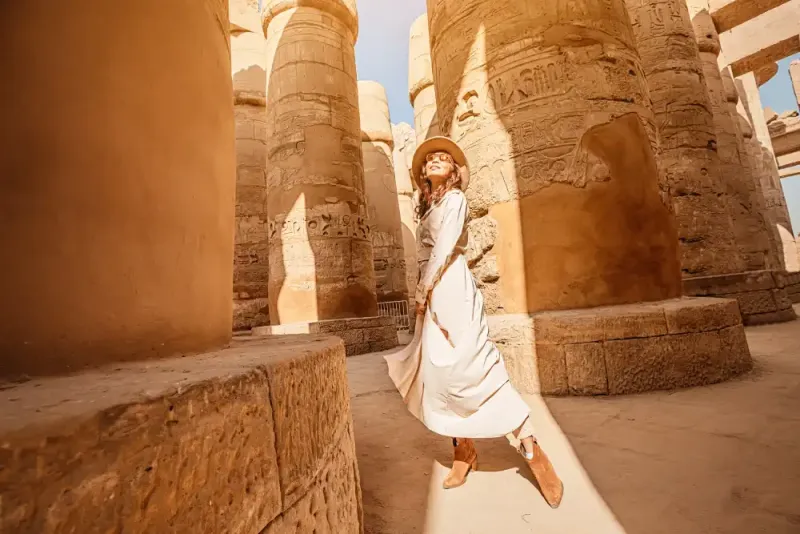
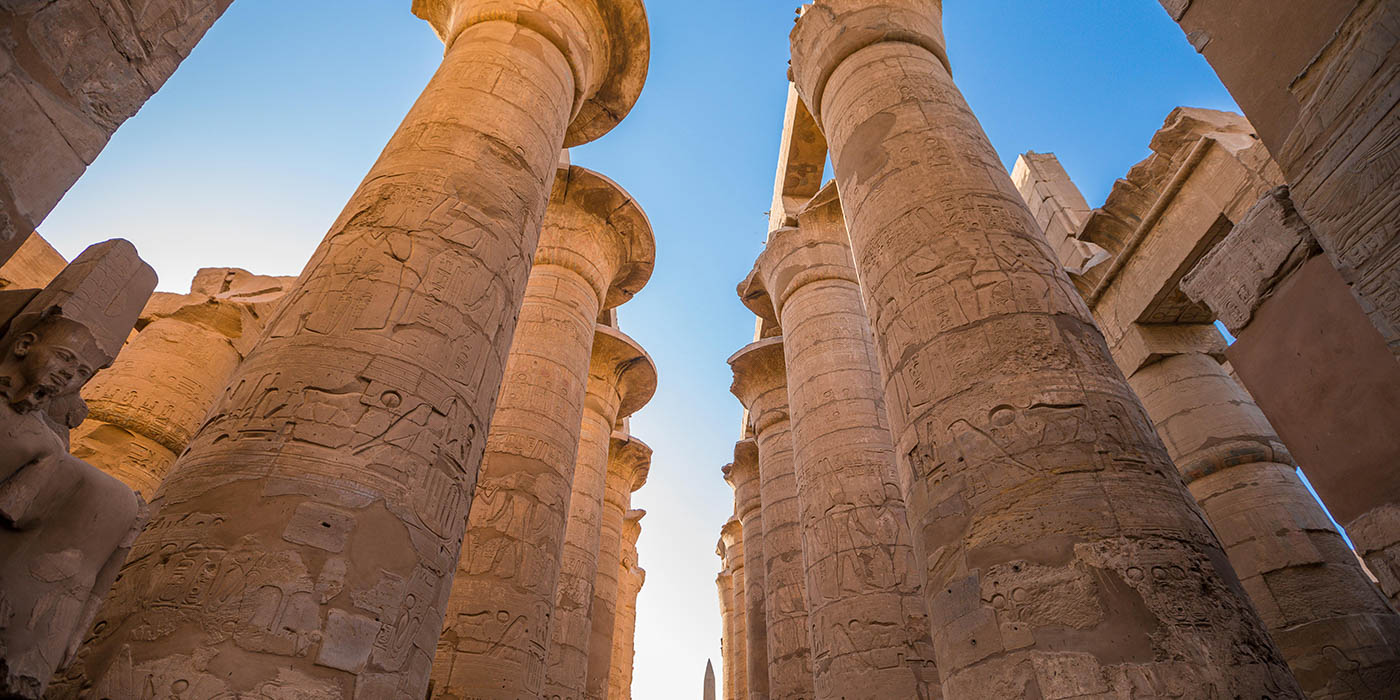
Karnak Temple is the largest religious complex ever built and one of the most overwhelming human constructions on earth. It covers 200 acres (80 hectares) and was built, added to, and modified by every major pharaoh for 2,000 years. The Great Hypostyle Hall alone — 134 massive columns, the tallest 21 metres high, all covered in hieroglyphs — takes 30 minutes to absorb properly. Allow two full hours. Do not rush Karnak. Do not try to see all of it — even in two hours your guide will take you through the essential sequence: the avenue of ram-headed sphinxes, the great pylons, the Hypostyle Hall, the obelisks of Hatshepsut and Thutmose I, the sacred lake.
1:30pm — Lunch on the Ship
Return to your Nile cruise ship for lunch. Most ships serve lunch from 1pm. The midday heat (even in winter) makes outdoor sightseeing uncomfortable. This is the right time to eat, rest in air conditioning, and enjoy the ship. Many travellers take a short nap.
3:30pm — Luxor Temple (1 hour)
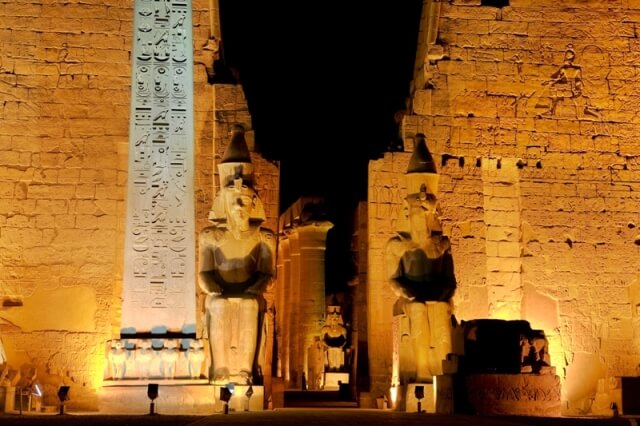
Luxor Temple sits directly on the Nile Corniche in the heart of modern Luxor city — an ancient temple that the modern city simply grew around. It is connected to Karnak by the 3-kilometre Avenue of Sphinxes (recently excavated and now walkable for part of its length). Luxor Temple at golden hour is one of the finest views in Egypt — the afternoon light on the obelisk and the seated colossi of Ramesses II is extraordinary. The temple has an extraordinary Roman chapel inside it (Alexander the Great's architects rebuilt the sanctuary), and an intact mosque built on top of the temple structure in the 11th century.
5:00pm — Board the Ship. Sail South.
Most Nile cruise ships depart Luxor in the late afternoon or early evening, sailing overnight toward Esna. Be on deck as the ship pulls away from the Luxor dock — watching Karnak and Luxor Temple recede as you sail south is one of the defining images of any Egypt trip.
Evening — Luxor Temple Illuminated (if your ship sails late)
If your ship departs after dark, Luxor Temple lit up at night from the Nile is extraordinary. The warm floodlighting on the golden sandstone, reflected in the river, is different from any daytime view. Some cruise itineraries allow an optional evening return to Luxor Temple after dinner — ask your guide if this is possible on your sailing.
What to Skip on a One-Day Luxor Visit
Ahmed's honest list of what to skip if you only have one day:
- Luxor Museum — excellent but not essential if you've visited the Grand Egyptian Museum in Cairo. Skip on a one-day visit; add it if you have a second Luxor day.
- Valley of the Nobles — the painted tombs of nobles (Ramose, Userhat, Sennofer) are extraordinary for their everyday life scenes but require real time to appreciate. Skip unless you have a specific interest in painted tomb art.
- Medinet Habu — the magnificent mortuary temple of Ramesses III on the West Bank is one of the most underrated sites in all Egypt. Genuinely spectacular and almost never crowded. If you can add 45 minutes to the West Bank morning, go here instead of the Colossi stop.
- The souq (market) during the morning — the Luxor souq is best in the evening after the day's heat. A morning market visit competes with temple time. Browse after Luxor Temple if you have time before the ship departs.
If You Have Two Days in Luxor
Some cruise itineraries (particularly Dahabiya sailings of 7 nights) allow 2 full days in Luxor. Ahmed's second-day additions:
- Day 2 morning: Medinet Habu (the Ramesses III temple) + Valley of the Nobles + Valley of the Queens (Nefertari's tomb if not visited on Day 1)
- Day 2 afternoon: Luxor Museum + evening at the Luxor souq + sunset felucca on the Nile
- Optional: Hot air balloon over Luxor at dawn on Day 2 — one of the great experiences in Egypt and only available from the West Bank early morning
Practical Information for Luxor on a Nile Cruise
Frequently Asked Questions — Luxor One Day
Can you see Luxor in one day from a Nile cruise?
Yes — and many thousands of travellers do every week. The key is the right sequence: West Bank (Valley of the Kings and Hatshepsut) first thing in the morning before the heat, rest on the ship at midday, Karnak in late morning, Luxor Temple in the afternoon. Following this order means you see everything essential without rushing or suffering in the midday heat.
Is one day in Luxor enough?
One day covers the essential sites — Valley of the Kings, Hatshepsut's Temple, Karnak, and Luxor Temple — which is more than most destinations offer in a week. Two days allows you to go deeper: Medinet Habu, the Valley of the Nobles, Nefertari's tomb, the Luxor Museum, and a hot air balloon at dawn. One day is enough to be transformed by Luxor. Two days is enough to truly know it.
What is the most important site in Luxor — Valley of the Kings or Karnak?
They are different in kind, not comparable in importance. The Valley of the Kings is intimate and spiritual — you descend into a pharaoh's burial chamber painted 3,300 years ago and stand in the same space where the royal mummy lay for millennia. Karnak is architectural and overwhelming — the largest building complex ever assembled, representing 2,000 years of pharaonic ambition. Both are essential. If forced to choose one, Ahmed says: Karnak, because nothing on earth prepares you for the scale of the Hypostyle Hall.
Is a hot air balloon over Luxor worth it?
Absolutely — if it fits your itinerary. The dawn hot air balloon over the West Bank of Luxor, with the Valley of the Kings below and the Nile glittering in the early light, is one of the great travel experiences of the world. It requires an early start (4:30am departure from the East Bank) and runs from the West Bank. On a one-day cruise stop, it typically replaces the morning ground visit rather than adding to it. Read the full guide: Hot Air Balloon Over Luxor 2026 — Is It Worth It?
A 7-night Dahabiya sailing typically allocates two full days to Luxor, giving you the complete West Bank and East Bank experience plus time to breathe. If you've always wanted to go deeper into the Valley of the Kings and the painted tombs of the Nobles, the Dahabiya itinerary is built for exactly that. Contact Ahmed to plan your Luxor experience properly.
Written by Ahmed Emam — Egypt travel specialist since 2010, founder of Around Egypt Tours. Has personally guided hundreds of one-day Luxor programmes from Nile cruise ships over 15 years. Last reviewed and updated: June 2026.