
Esna Temple — Complete Visitor Guide 2026
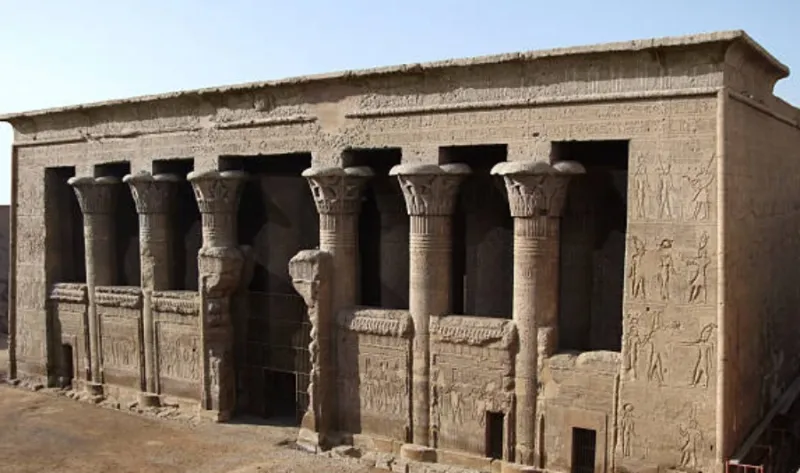
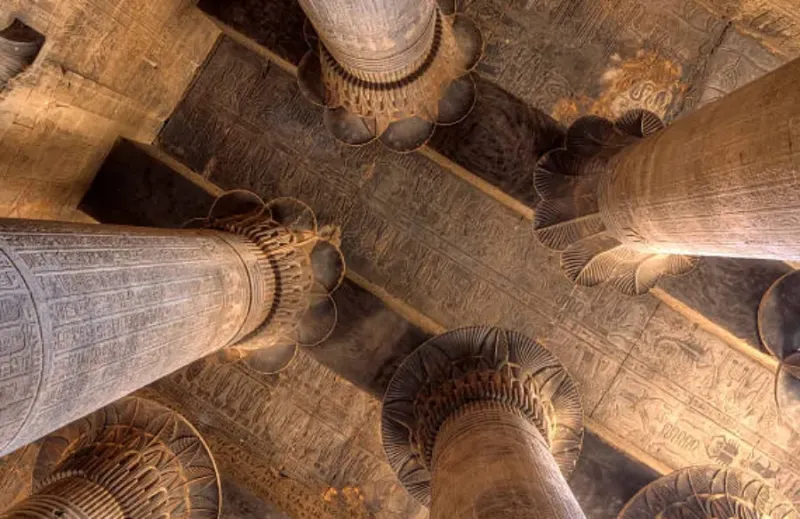
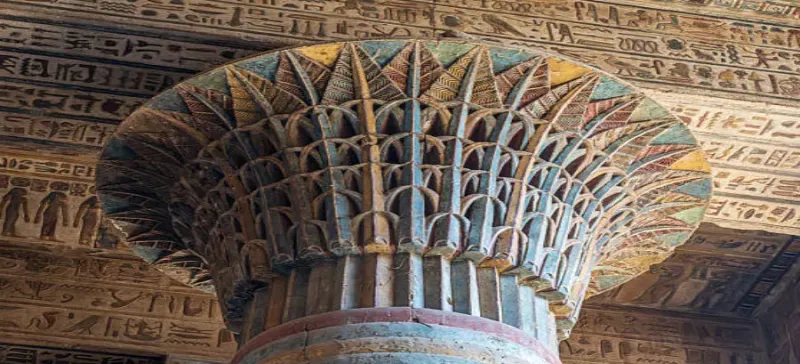
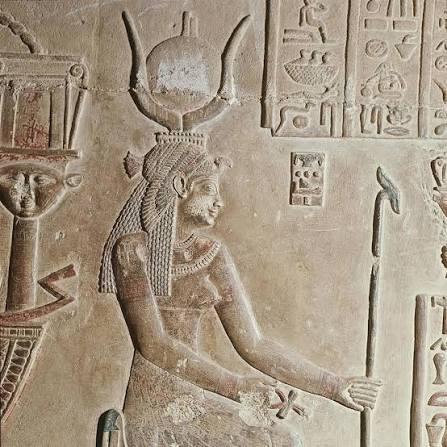
Every temple on the Nile cruise route involves an approach through desert landscape, along a processional avenue or across an open plain. Esna Temple is approached differently. You walk from the cruise ship through the busy modern market street of Esna town — past fabric shops, coffee stalls, spice vendors and schoolchildren — and then descend a long stone staircase that takes you approximately 9 metres below the level of the road into an excavated pit. At the bottom, a beautifully preserved Roman-period hypostyle hall opens before you, its 18 elaborate columns intact, its astronomical ceiling vivid, the market noise from the street above filtering faintly down while 2,000-year-old reliefs of Roman Emperors in pharaonic regalia cover every wall surface. This is one of the most unexpected and quietly extraordinary experiences on the Nile cruise route. Esna is often described as the least significant stop on the cruise. It is the most surprising. This guide is written by Ahmed Emam with 15 years of bringing Nile cruise clients through the descent.
Why the Temple Is Below the Street
Esna has been continuously inhabited for thousands of years. As successive generations built on the ruins of previous ones, the ground level rose through the natural accumulation of rubble, mud-brick debris and earth. By the time of the Ptolemaic and Roman periods, the original ground level of the New Kingdom temple was already lower than the contemporary street. By the medieval and Ottoman periods, the entire temple had been buried. The hypostyle hall — the only surviving part of the ancient structure — was excavated in the 19th century, but the modern town could not simply be demolished to retrieve the rest of the temple. The full temple extends northward beneath the buildings of Esna and is still unexcavated. What you visit is the pronaos (vestibule hall) only — the equivalent of the outer hypostyle hall in a larger temple complex. Despite this, it is complete, beautifully preserved and contains some of the most remarkable inscriptions in all of Egyptian temple art.
What to See at Esna Temple
Khnum — The God Who Made Humans from Clay
Khnum is one of the most ancient Egyptian gods — depicted as a man with the head of a ram or as a ram himself. He was believed to be the guardian of the source of the Nile, residing in a cave at the First Cataract near Aswan from which the Nile was believed to spring. He was also the divine potter — the god who created human beings and all living creatures on a potter’s wheel, fashioning each body from Nile clay and breathing life into it. The creation scenes showing Khnum at his wheel, forming both a human body and its ka (spiritual double) simultaneously, appear repeatedly in the Esna reliefs and in the divine birth scenes of other temples. Khnum was also the protector of the pharaoh’s physical body — his pottery was not limited to humans but extended to the royal person himself, making the king’s divine right physically embodied in Khnum’s craftsmanship. The ram — ba — was simultaneously Khnum’s sacred animal and the hieroglyphic symbol for the soul, adding a theological complexity to the choice of a ram head for the creator god.
The Cryptographic Inscriptions — Writing in Rams and Crocodiles
Esna Temple is internationally known among Egyptologists for its cryptographic or “alloglyphic” inscriptions — texts in which every hieroglyphic sign in a passage is replaced by a single repeated animal image. In one famous inscription, an entire religious text is written using only images of rams — each ram in a different pose, each pose carrying a specific phonetic value, so that the reader must know the code to decipher the message. In another, the entire text uses only crocodiles. The ram inscriptions reference Khnum (whose sacred animal is the ram); the crocodile texts reference Sobek. These inscriptions are not merely decorative. They represent a highly sophisticated system of sacred writing that served both theological and protective purposes — encoding sacred knowledge in a form accessible only to initiates. They are unique to Esna Temple and have been the subject of dedicated Egyptological study for over a century. Even today, portions of the cryptographic texts at Esna remain only partially interpreted. Standing before a wall of identical rams arranged in rows, knowing that they form a coherent sacred text, is one of the most intellectually striking moments available on the Nile cruise route.
The Esna Lock — When the Ship Waits, You Visit
The Esna Barrage — a low dam and navigation lock across the Nile at Esna — was built in 1906 to regulate water flow and support irrigation downstream. Every Nile cruise ship travelling between Luxor and Aswan (or in reverse) must pass through the Esna Lock. The locking process takes 1–2 hours — depending on traffic and waiting time — during which the ship is stationary in the lock channel. This waiting period is the natural window for the Esna Temple visit: passengers disembark, walk the 500 metres from the mooring to the temple entrance, descend into the excavated hall, visit for 45–60 minutes with a guide, and return to the ship before it has cleared the lock. The practical integration of the temple visit with the lock waiting time means that Esna is the most efficiently visited temple on the cruise route — the ship loses no sailing time and gains a temple excursion. On some itineraries, the lock passage happens in the evening or early morning; your guide advises on the schedule for your cruise.
Practical Information
Ahmed Emam’s Insider Tips
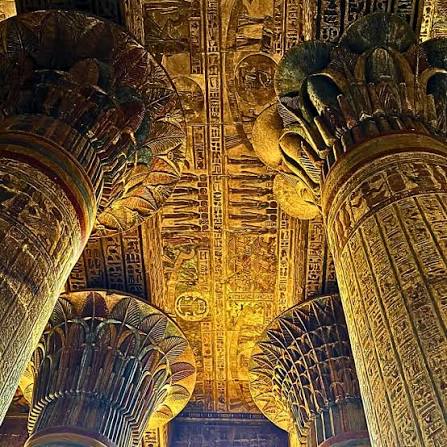
- Look up at the ceiling before looking at the walls — the astronomical ceiling of Esna, recently cleaned by a German-Egyptian conservation project, is the first thing to observe when you enter. The zodiac signs, the calendar texts and the cosmic imagery have been revealed in detail that was obscured by centuries of soot and grime. Stand in the centre of the hall and look straight up.
- Ask your guide to find the cryptographic ram text — the wall panels where entire texts are written in repeated ram images are the most visually unusual inscriptions in any Egyptian temple. Your guide locates the main panel and explains the encoding system. Once you understand that each different ram pose is a different letter or sound, the wall transforms from decoration into communication.
- Identify a Roman Emperor on the walls — the temple walls show Roman Emperors in full pharaonic regalia making offerings to Khnum. Your guide identifies specific emperors by their cartouches — the oval ring around royal names that appears in both pharaonic and Roman-Egyptian art. Claudius, Nero and Vespasian are all here, depicted exactly as Egyptian pharaohs.
- The descent into the pit is the beginning of the experience, not a transition to it — as you walk down the staircase from the modern street level to the ancient floor, the noise of the modern market fades and the 2,000-year-old columns come into view progressively. Slow down. The transition from present to ancient is unusually tangible here.
- The Esna market on the way back to the ship is a better shopping stop than Khan El Khalili for spices — the market immediately around the temple entrance sells spices, dried herbs, essential oils and Nubian crafts at genuinely local prices without the tourist markup of Luxor or Aswan bazaars. Your guide advises on what is fairly priced.
Esna Temple on a Nile Cruise
Esna Temple is visited on every Nile cruise between Luxor and Aswan. The ship passes through the Esna Lock, a process that takes 1–2 hours, and during this waiting period passengers visit the temple with a private guide. The lock passage may occur in the morning, afternoon or evening depending on the cruise schedule and the queue of ships at the lock. Your guide gives you advance notice so you can be ready to disembark. Entrance fees are included in all Best Nile Cruises packages. The Esna visit is followed by the ship’s arrival at Edfu for the Temple of Horus excursion the following morning.
Frequently Asked Questions
Why is Esna Temple below the street level?
Esna has been continuously inhabited for thousands of years. As successive generations built on the ruins of previous structures, the ground level rose naturally through the accumulation of mud-brick debris, rubble and earth. By the medieval period, the ancient temple was completely buried. When archaeologists excavated the hypostyle hall in the 19th century, the modern town of Esna could not be demolished to clear the full site, so the excavated hall sits approximately 9 metres below the current street level in an open pit. The rest of the ancient temple extends northward beneath the buildings of Esna and has never been excavated.
What are the cryptographic inscriptions at Esna Temple?
The cryptographic (or “alloglyphic”) inscriptions at Esna are texts in which every hieroglyphic sign is replaced by a repeated animal image — most famously the ram (the sacred animal of Khnum) or the crocodile (the sacred animal of Sobek). Each animal is shown in a different pose; each pose carries a specific phonetic value. To read the text, you must know which pose represents which sound — a system accessible only to temple initiates. These texts are unique to Esna Temple and are the most elaborate example of cryptographic writing in ancient Egyptian art. Some passages remain only partially decoded by modern scholars.
Who was Khnum, the god of Esna Temple?
Khnum was the ram-headed ancient Egyptian god of the source of the Nile and the divine creator of human life. He was believed to reside at the First Cataract near Aswan, from where the Nile was thought to emerge. His most distinctive attribute was his potter’s wheel: he fashioned human beings — and all living creatures — from Nile clay on a wheel, simultaneously creating both the physical body and its spiritual double (ka). Esna was the principal cult centre of Khnum, and the temple’s hypostyle hall carries extensive scenes of Khnum at his wheel, creating the bodies of pharaohs and ordinary humans alike.
What is the Esna Lock on the Nile?
The Esna Barrage and Lock is a navigation structure across the Nile at Esna, built in 1906 during the British period to regulate water flow and support downstream irrigation. Every Nile cruise ship must pass through the lock, which raises or lowers the vessel to match the water level on the other side of the barrage. The process takes 1–2 hours depending on traffic. During this waiting period, Best Nile Cruises passengers visit the Temple of Khnum, returning to the ship before it completes the lock passage. The lock is also a lively scene in itself — local vendors approach the moored ships in small boats selling textiles, spices and souvenirs.
Is Esna Temple on every Nile cruise itinerary?
Yes — every Nile cruise ship between Luxor and Aswan passes through the Esna Lock, and the temple visit is included in all Best Nile Cruises itineraries. Some budget cruise operators do not arrange the guided excursion during the lock wait, leaving passengers on the ship. Best Nile Cruises always arranges the temple visit with a private Egyptologist guide during the Esna Lock passage, ensuring you make the most of the waiting time.
Esna Temple is included in all our Nile cruise itineraries and Cairo and Nile cruise packages from $899 — private Egyptologist guide and entrance fees included during the Esna Lock passage. Contact us for a free personalised Nile cruise itinerary.
Written by Ahmed Emam — Egypt travel specialist since 2010, founder of Around Egypt Tours and Egypt For Travel Has visited Esna Temple over 500 times during Nile cruise Lock passages with international clients.